Way Beyond Greenwashing: Have Corporations Captured Big Conservation?

Jonathan Latham (Photo Credit: auspices) Imagine an international mega-deal. The global organic food industry agrees to support international agribusiness in clearing as much tropical rainforest as they want for farming. In return, agribusiness agrees to farm the now-deforested land using organic methods, and the organic industry encourages its supporters to …

‘Phantom Heritability’ Indicates Poor Predictive Value of Gene Tests

Helen Wallace, GeneWatch UK (photo credit: jurvetson) Last week, a paper on “phantom heritability” was published by a research group led by Eric Lander, one of the leading contributors to understanding the implications of the Human Genome Project (HGP) for common, complex diseases such as heart disease and cancer (1). …

The Great DNA Data Deficit: Are Genes for Disease a Mirage?

Just before his appointment as head of the US National Institutes of Health (NIH), Francis Collins, the most prominent medical geneticist of our time, had his own genome scanned for disease susceptibility genes. He had decided, so he said, that the technology of personalised genomics was finally mature enough to yield meaningful results.

The AquaBounty Salmon: Will the World’s First Commercial GE Animal Be an Albatross?

Jonathan Latham and Allison Wilson (Photo Credit: Yodod) Is it unrealistic to expect the scientific approval process for the world’s first commercial genetically engineered (GE) animal, the AquAdvantage salmon, to be rigorous and complete? Or for the applicant to present experiments that fully meet regulatory expectations? If you expect these …

Recent Articles:

Way Beyond Greenwashing: Have Corporations Captured Big Conservation?

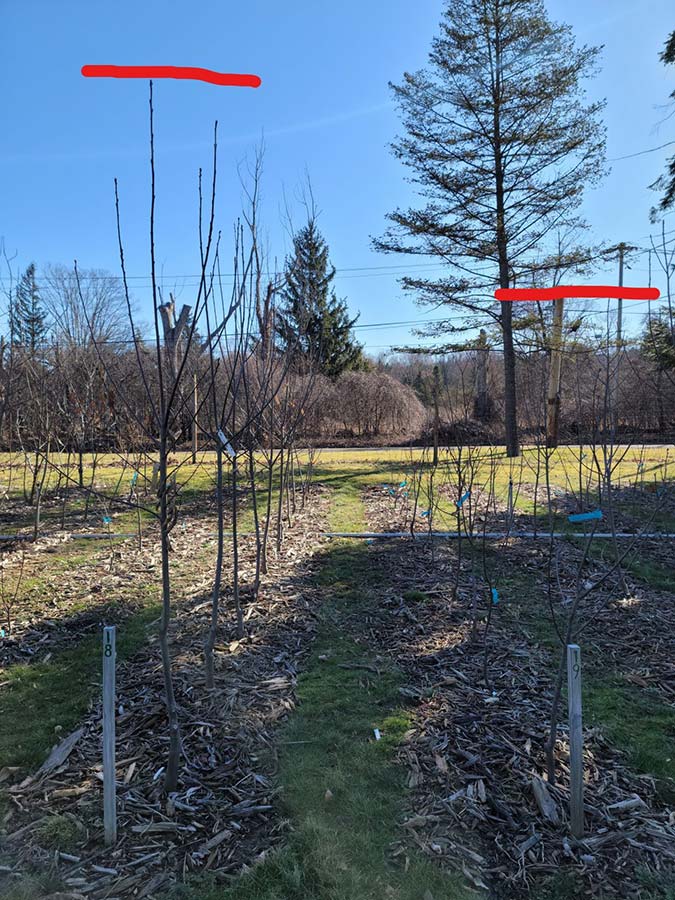
Malaysia: Deforestation for Agriculture

Jonathan Latham (Photo Credit: auspices)

Imagine an international mega-deal. The global organic food industry agrees to support international agribusiness in clearing as much tropical rainforest as they want for farming. In return, agribusiness agrees to farm the now-deforested land using organic methods, and the organic industry encourages its supporters to buy the resulting timber and food under the newly devised “Rainforest Plus” label. There would surely be an international outcry.

Virtually unnoticed, however, even by their own membership, the world’s biggest wildlife conservation groups have agreed exactly to such a scenario, only in reverse. Led by the World Wide Fund for Nature (WWF), many of the biggest conservation nonprofits including Conservation International and the Nature Conservancy have already agreed to a series of global bargains with international agribusiness. In exchange for vague promises of habitat protection, sustainability and social justice, these conservation groups are offering to greenwash industrial commodity agriculture.
… Continue Reading

‘Phantom Heritability’ Indicates Poor Predictive Value of Gene Tests

DNA Sequencing Machines

Helen Wallace, GeneWatch UK (photo credit: jurvetson)

Last week, a paper on “phantom heritability” was published by a research group led by Eric Lander, one of the leading contributors to understanding the implications of the Human Genome Project (HGP) for common, complex diseases such as heart disease and cancer (1). The paper has created excitement amongst scientists who have been critical of the claims made for the likely impacts of the HGP on health and medicine. This is not because the paper makes a startling new discovery, but because it is an important step towards recognition of these long standing criticisms. … Continue Reading

New Report Links Food, Climate and Agricultural Policies

Jonathan Latham and Allison Wilson

Understanding of the ‘problem’ of agriculture took a giant step forward in 2007 with publication of the UN IAASTD report. This report, which was as important for agriculture as the IPCC reports have been for the climate, pinpointed a move to ecology-based agriculture as the key to meeting many other fundamental needs such as clean water, safe food and sustainability. What the IAASTD didn’t do, at least directly however, was to focus on politics, especially the obstacles to progress in improving agriculture.

A new report, The Wheel of Life:  Food, Climate, Human Rights and the Economy (Sept. 2011), released by the Center for Food Safety (CFS) and the Heinrich Böll Stiftung Foundation, usefully complements this deficit. … Continue Reading

Psychiatrists plead to continue funding of genetic approaches to disease

August 30, 2011 Health, News 3 Comments

Jonathan Latham

Ninety six leading psychiatric geneticists have publicly requested their scientific funding agencies not to abandon the search for genetic links to mental health. In a letter, published Aug 9th in the journal Molecular Psychiatry, they argue that the ongoing failure to uncover significant disease genes for mental illness does not indicate that current research is fundamentally misdirected.

Instead, they believe that current experimental designs lack sufficient statistical power. And it is a defect they want remedied by further studies. “Since family history is a major risk factor” they write “we urge the major funding bodies worldwide to continue to support GWAS (Genome-Wide Association Studies) as a major investigative tool’. … Continue Reading

23andMe disproves its own business model

July 7, 2011 Health, News 1 Comment

Jonathan Latham

Online gene testing company 23andMe last week published its first genetic research study into Parkinson’s Disease. The study was funded by the participants (many of whom are customers of 23andMe), the company itself, and Google-founder Sergei Brin, who is married to 23andMe’s CEO and founder, Anne Wojcicki (1). Wojcicki is also personally subsidising the company and is a co-author on the paper.

23andMe’s study shows that two new genes it has discovered, plus all known existing genes linked to the disease, are not much better than random selection for predicting who will get Parkinson’s Disease. … Continue Reading

How Agriculture Can Provide Food Security Without Destroying Biodiversity

Jonathan Latham and Allison Wilson

According to conventional wisdom, the Brazilian city of Belo Horizonte (pop. 2.5 million) has achieved something impossible. So, too, has the island of Cuba. They are feeding their hungry populations largely with local, low-input farming methods that enhance the environment rather than degrade it. They have achieved this, moreover, at a time of rising food prices when others have mostly retreated from their own food security goals.
… Continue Reading

Science News on the Web

Why Independent Science News?

Scientific inventions and ideas shape the future. As science becomes ever more beset by commercial and ideological pressures, there is now an urgent need for scientific reporting and analysis from an independent, expert, public interest perspective. With this as its standard, Independent Science News works to shape a future that is biodiverse, just, and healthy for everyone.
More about us...

Related News Articles

New Report Links Food, Climate and Agricultural Policies

24 Sep 2011

Psychiatrists plead to continue funding of genetic approaches to disease

30 Aug 2011

23andMe disproves its own business model

7 Jul 2011

Strangely like Fiction: Sponsored Academics Admit Falsely Claiming Dairy Hormone Safety Endorsements

22 Feb 2010

Transgenic High-Lysine Corn LY038 Withdrawn After EU Raises Safety Questions

10 Nov 2009

Welsh Farmer’s Defiance of GMO ‘Ban’ Not So Defiant After All

7 Oct 2009

US Crop Yield Increases Owe Little to Biotechnology

16 Apr 2009

Bee Learning Behaviour Affected by GMO Toxin

21 Oct 2008

Commentaries

Way Beyond Greenwashing: Have Corporations Captured Big Conservation?

Malaysia: Deforestation for Agriculture

Jonathan Latham (Photo Credit: auspices) Imagine an international mega-deal. The global organic food industry agrees to support international agribusiness in clearing as much tropical rainforest as they want for farming. In return, agribusiness agrees to farm the now-deforested land using organic methods, and the organic industry encourages its supporters to …

‘Phantom Heritability’ Indicates Poor Predictive Value of Gene Tests

DNA Sequencing Machines

Helen Wallace, GeneWatch UK (photo credit: jurvetson) Last week, a paper on “phantom heritability” was published by a research group led by Eric Lander, one of the leading contributors to understanding the implications of the Human Genome Project (HGP) for common, complex diseases such as heart disease and cancer (1). …

The Great DNA Data Deficit: Are Genes for Disease a Mirage?

Are Genes for Disease a Mirage?

Just before his appointment as head of the US National Institutes of Health (NIH), Francis Collins, the most prominent medical geneticist of our time, had his own genome scanned for disease susceptibility genes. He had decided, so he said, that the technology of personalised genomics was finally mature enough to yield meaningful results.

The AquaBounty Salmon: Will the World’s First Commercial GE Animal Be an Albatross?

The AquaBounty Salmon

Jonathan Latham and Allison Wilson (Photo Credit: Yodod) Is it unrealistic to expect the scientific approval process for the world’s first commercial genetically engineered (GE) animal, the AquAdvantage salmon, to be rigorous and complete? Or for the applicant to present experiments that fully meet regulatory expectations? If you expect these …

More Commentaries...

Reviews

The China Study: The Most Comprehensive Study of Nutrition Ever Conducted and the Startling Implications for Diet, Weight Loss and Long-Term Health

The China Study

Author: T. Colin Campbell, PhD and Thomas M. Campbell II ISBN: 1932100660, 978-1932100662 Publisher: Benbella Books (2004) What will it take for veggie stir-fry on rice to replace a beef burger on a bun as the all-American meal? A switch to a more plant-based diet has been standard dietary advice …

The Unhealthy Truth: How our Food is Making us Sick and What We Can Do About It

The Unhealthy Truth

Author: Robyn O’Brien (with Rachel Kranz) ISBN: 978-0-7679-3071-0 Publisher: Broadway books (2009) Allergies and food intolerances are serious medical conditions. They are the cause of many deaths and hospitalizations annually and they predispose to other illnesses. They can also exact a high toll in other ways since worry, inconvenience and …

More Reviews...

Switch to our mobile site